Plant Hub
/
Educational Videos
/
GT Silica: The Forgotten Element for Stronger Plants
Educational Videos

GT Silica: The Forgotten Element for Stronger Plants

Silica strengthens cell walls, supports photosynthesis, and improves stress resistance. Learn how to dose and mix GT Silica correctly—including the right order and why pH testing protects nutrient availability.

Jump to Article
Video 5
Play Video

Author

Natalie Rijavec

Share

https://www.growthtechnology.com.au/article/gt-silica-forgotten-element-stronger-plants
Copied!

Categories

Educational Videos
Growers Profiles
Indoor Growing
Learn & Grow
Plant Specific Guides
Product Guides
Science & Education
All Categories
This is some text inside of a div block.

Silica: the “forgotten element” that can change plant resilience

Silica is often described as the forgotten element. It’s not classed as essential for all plants—yet when used correctly, it can deliver outsized benefits to plant strength and performance.

GT Silica is a powerful additive designed to improve plant health by supporting structure, photosynthesis, and stress tolerance.

What silica does (in practical terms)

Used correctly, silica can support:

  • Stronger cell walls → better resistance to pests and fungal pressure
  • Improved chlorophyll production → stronger photosynthesis performance
  • Better CO₂ uptake → improved efficiency in growth processes
  • Higher stress resistance → better performance under environmental swings

The net effect is a plant that can be more robust, more resilient, and easier to keep consistent.

Featured product

GT Silica
This is some text inside of a div block.

How to dose and mix GT Silica

Important: Silica is an additive, not a complete feed. Always run it alongside a complete nutrient solution, such as a Focus Range product (for example, Foliage Focus).

Dosing guide

  • Hydroponic / semi-hydro: 5 ml per litre of water
  • Potting mixes: 2–3 ml per litre of water

How to mix GT Silica (order matters)

Silica needs to be mixed correctly to avoid stability issues.

  1. Add GT Silica to plain water
  2. Stir thoroughly, then rest for 5 minutes
  3. Add your nutrient solution
  4. Stir thoroughly, then rest for 5 minutes
This is some text inside of a div block.

pH: the step that protects nutrient availability

Silica is naturally alkaline, which means it can raise the pH of your solution.

That’s why pH testing is not optional if you want predictable results:

  • If pH is too high, it can reduce nutrient availability
  • Reduced availability makes it harder for plants to absorb the minerals you’re paying for

Aim for a practical working range of pH 5.5–6.5 (then adjust as needed using a pH-down product).

Fresh mixing only

Unlike many nutrients, silica doesn’t hold well once mixed.

  • Mix fresh
  • Use promptly
  • Don’t store mixed silica solutions for later use

Prefer “no pH fuss”?

If pH adjusting feels like too much complexity, a ready-to-use foliar product that includes silica can be a simpler pathway—while still delivering some of the resilience benefits silica is known for.

Key takeaway: Silica can be a game changer—but only when it’s mixed in the right order and followed by pH testing.

Products for your silica routine

GT Silica
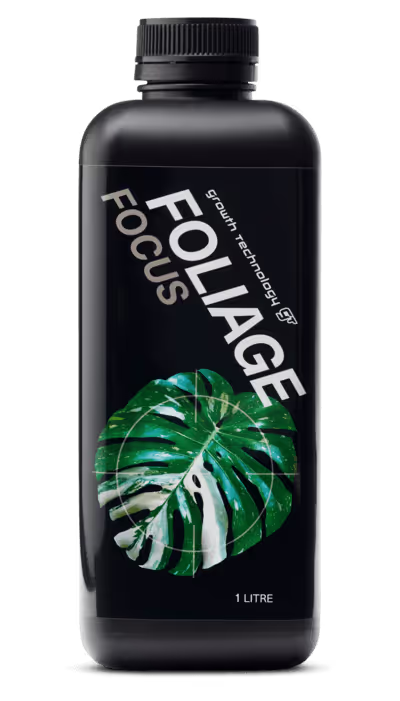
Foliage Focus

Share

https://www.growthtechnology.com.au/article/gt-silica-forgotten-element-stronger-plants
This is some text inside of a div block.
Copied!

Related Stories

Educational Videos
Natalie Rijavec

Focus Range: Science-Backed Nutrition for Growing Confidence

Explore Growth Technology Australia's Focus Range—premium, science-backed nutrient solutions designed around outcomes like foliage, flowering, herbs, and all-round growth.

Focus Range: Science-Backed Nutrition for Growing Confidence
Educational Videos
Natalie Rijavec

RootZone: The Organic Additive for Stronger Roots

RootZone is a kelp-based organic stimulant designed to enhance root growth and plant vitality. Learn what it does, how to dose it, and why it should always be used alongside a complete nutrient solution.

RootZone: The Organic Additive for Stronger Roots
Educational Videos
Natalie Rijavec

Clonex Clone Solution (CCS): Fast Root Growth for Propagation

Clonex Clone Solution (CCS) supports fast, vigorous root growth during propagation and establishment. Learn how it complements Clonex Gel, how to dose it, and when to switch to complete nutrition.

Clonex Clone Solution (CCS): Fast Root Growth for Propagation
Educational Videos
Natalie Rijavec

Plant Nutrients vs Fertilisers: What's the Difference?

Plants need 12 essential minerals—not just NPK. Learn the difference between traditional fertilisers and liquid plant nutrients, and why bioavailable, immediately available minerals support more consistent growth.

Plant Nutrients vs Fertilisers: What's the Difference?

More Stories

FAQs

QOTA

Can I use the Focus range if I am not growing hydroponically?

Yes, you certainly can. Simply follow the correct dilution rate on the label to ensure your plants receive the appropriate nutrients.

Can I use the Focus range if I am not growing hydroponically?

Some other list

Why does mixing matter when using GT Silica?

Why does mixing matter when using GT Silica?

How do I use GT Foliar?

GT Foliar comes in a ready to use trigger pack. It couldn’t get much easier – simply point and spray.

How do I use GT Foliar?

LatestEducational VideosFacts

Focus Range: Science-Backed Nutrition for Growing Confidence

Explore Growth Technology Australia's Focus Range—premium, science-backed nutrient solutions designed around outcomes like foliage, flowering, herbs, and all-round growth.

Focus Range: Science-Backed Nutrition for Growing Confidence

RootZone: The Organic Additive for Stronger Roots

RootZone is a kelp-based organic stimulant designed to enhance root growth and plant vitality. Learn what it does, how to dose it, and why it should always be used alongside a complete nutrient solution.

RootZone: The Organic Additive for Stronger Roots

Why does mixing matter when using GT Silica?

Why does mixing matter when using GT Silica?

How do I use GT Foliar?

GT Foliar comes in a ready to use trigger pack. It couldn’t get much easier – simply point and spray.

How do I use GT Foliar?

How often should I use GT Foliar?

For optimum growth, quality and health, mist your plants with GT Foliar 2 to 3 times a week.

How often should I use GT Foliar?

Is Clonex safe to use?

Yes, Clonex is safe for use on all types of plants, including medicinal plants, and is APVMA-registered for your peace of mind.

Is Clonex safe to use?

Related  Products

Foliage Focus
Complete Focus
Succulent Focus
Flower Focus
Orchid Focus
Browse All Products