As days shorten and winter settles in, indoor plants that were producing new growth weekly appear to pause. Leaf production slows or stops. The growing medium remains damp for days longer than it did in summer. A plant that was visibly thriving now seems to be doing nothing at all.
This is one of the most common points where growers lose confidence and respond in one of two ways: increasing feeding to stimulate growth or withdrawing nutrition entirely. Neither response serves the plant well, and both can create problems that would not have existed with a clearer understanding of what is occurring.
Why Indoor Plants Slow Down in Winter
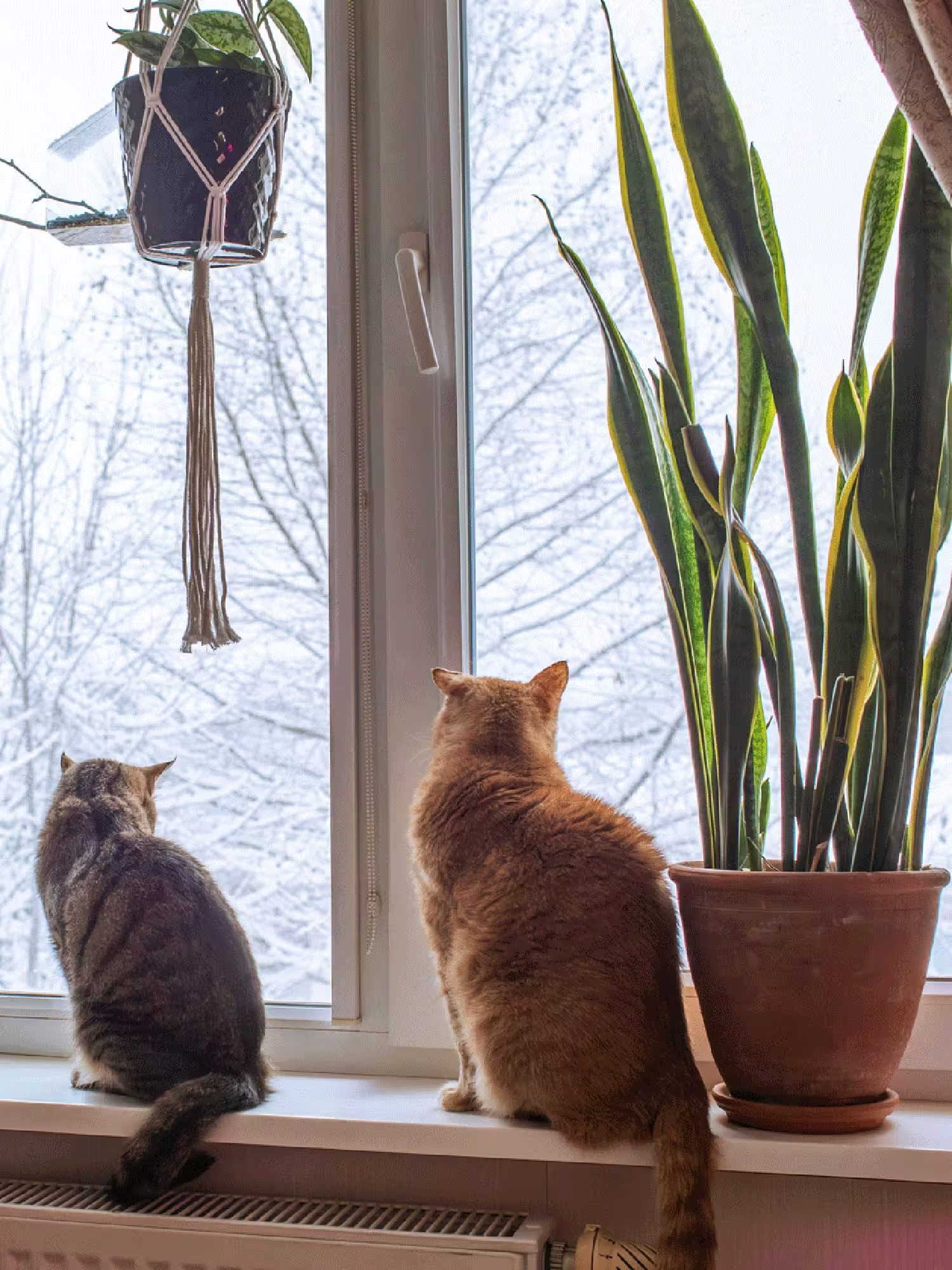
Even inside climate-controlled homes, winter alters the single most important variable for plant growth: light. As days shorten and the sun tracks lower across the sky, the intensity and duration of natural light reaching indoor spaces diminishes significantly. In many homes, winter light levels fall to less than half of their summer equivalent—even in the same position beside the same window.
Light drives photosynthesis. With reduced photosynthetic energy available, plants conserve resources. Visible growth slows or pauses. Water uptake decreases as plants produce less new tissue. The growing medium retains moisture longer because roots are drawing less water.
None of this indicates a plant in distress. It reflects an intelligent physiological response to changing conditions—above-ground growth recedes while essential maintenance continues below the surface. Root tissue is repaired, cellular processes sustained, and energy reserves accumulated for the season ahead.
"I'm seriously speechless at how much my plants have grown after three waterings of GT Foliage Focus—it's wild and almost unbelievable. Plants that haven't put off any new growth in six months now have three to four leaves and counting... in the beginning of winter!"
Why Nutrition Still Matters
Reduced growth does not equate to reduced nutritional need. Even at a slower metabolic rate, roots continue absorbing water and minerals to maintain healthy tissue, support the root system, and sustain the plant through the cooler months.
Completely withdrawing nutrition over winter leaves plants operating on diminishing reserves for an extended period. The consequences may not be immediately visible, but they manifest when it matters most—at the onset of the growing season. Plants deprived of nutrition through winter frequently emerge with pale or yellowed new growth, delayed leaf production, and heightened vulnerability to pests and disease. Maintaining steady, balanced nutrition through the slower months prevents this deficit.
Reading Plant Signals
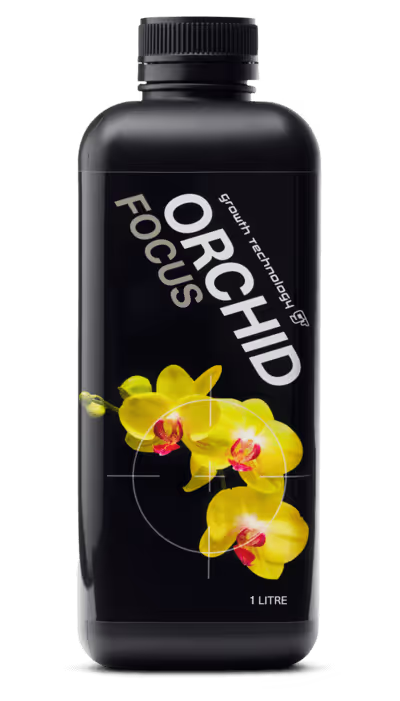
The plant itself provides the clearest guidance. When the growing medium retains moisture longer, it indicates reduced water uptake. Watering frequency decreases accordingly. Since GT Focus nutrients are formulated to be applied with every watering, fewer waterings naturally reduce feeding frequency. The reduced water demand becomes the guide for nutritional intake.
There is no need to change the dilution rate. The GT Focus range is formulated at the optimal concentration for uptake regardless of season. What changes is application frequency, governed by the plant’s water demand. When the growing medium dries out, the plant is ready for its next application. A moisture meter provides precision, though the finger test—medium dry to the second knuckle—remains a reliable indicator.
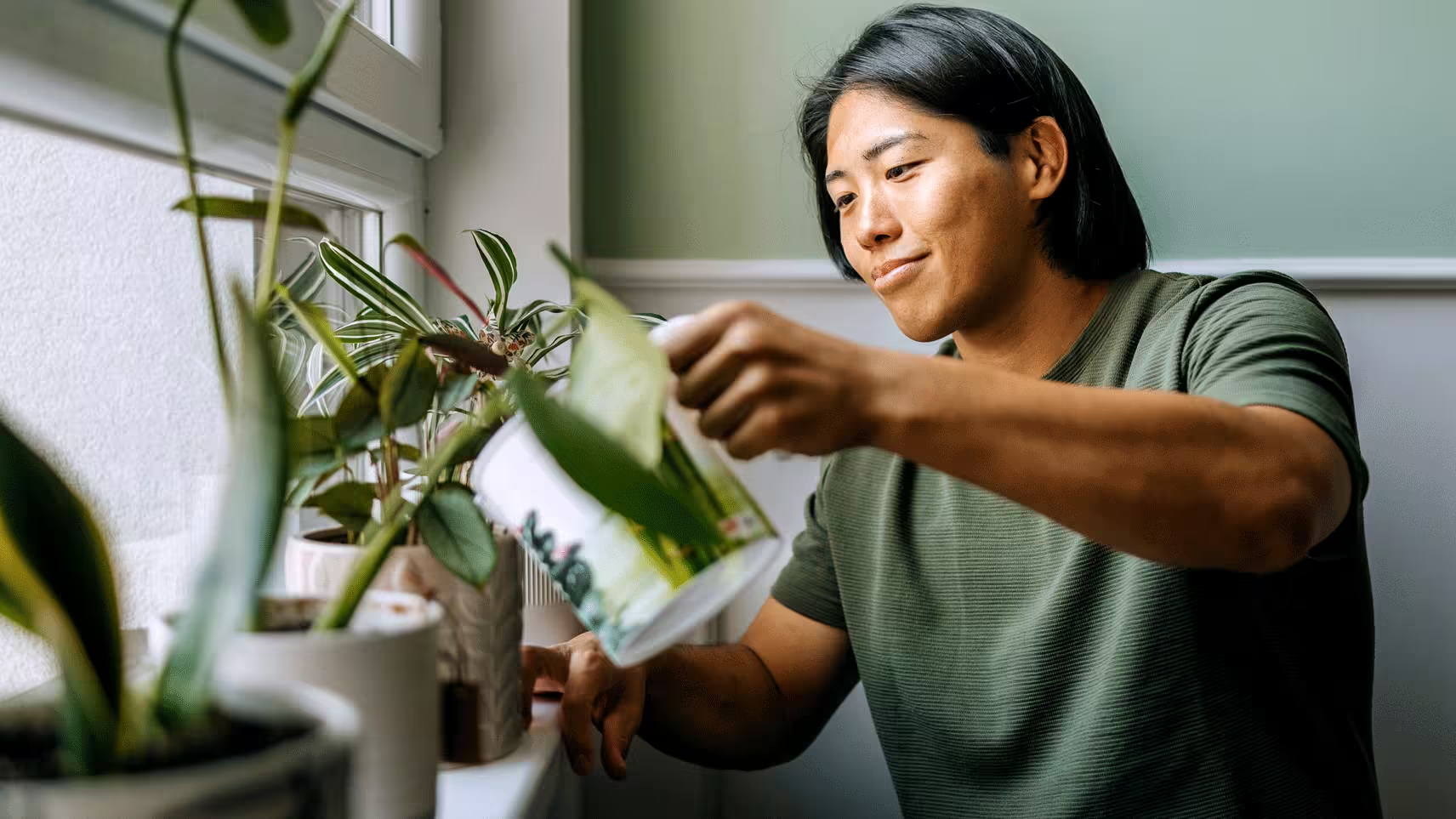
Feeding when plants signal readiness rather than following fixed schedules cultivates the observational skill that underpins confident plant care, and applies equally across every season.
Supporting Root Health Through Winter
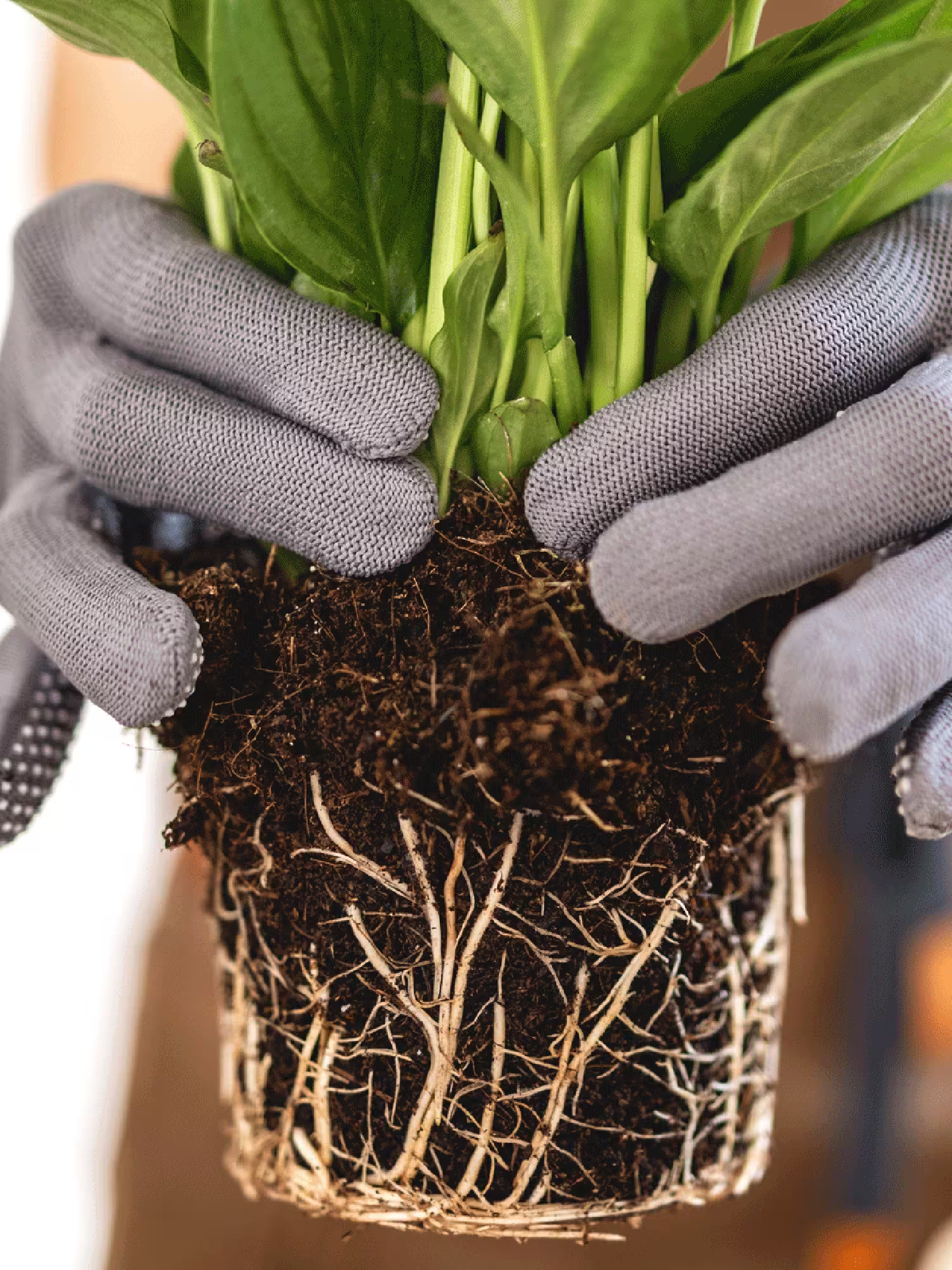
While visible growth slows, roots remain the site of continued activity: absorbing minerals, anchoring the plant, and storing energy to fuel new growth when conditions improve. Robust root health entering winter translates directly to the emergence of a stronger plant in spring. Compromised roots frequently lead to problems—slow recovery, yellowing foliage, or new shoots that fail to develop.
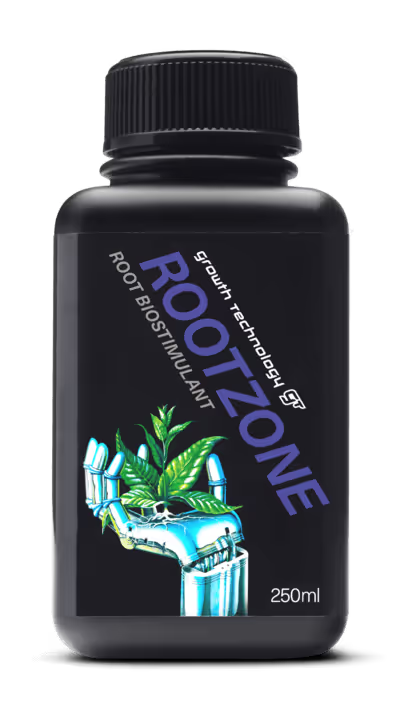
GT RootZone supports this process. This biostimulant additive, formulated with marine extracts, fulvic acid, amino acids, and essential vitamins, supports root health and enhances nutrient uptake during periods when the root system is your plant’s primary focus. Added alongside GT Focus nutrients with every watering, it maintains root vitality through the quieter months and supports a strong transition back to active growth.
Related Products

Complete Focus
Rootzone
Every Environment Differs
How significantly plants slow depends entirely on their conditions. Plants beside bright windows may show minimal change in growth rate. Those in darker areas of the home, further from natural light, may slow considerably. Plants grown under supplemental lighting may continue producing new growth through winter—in which case, there is no reason to alter the feeding routine.
Observation of individual plants, rather than blanket rules applied to an entire collection, yields more reliable results. The growing medium is the most reliable indicator: if it dries at the same rate as in summer, the plant remains actively growing. If it retains moisture for significantly longer, plant growth has slowed and watering should adjust accordingly.
FAQs
What is the Focus range?
The Focus Range by Growth Technology is a range of premium hydroponic nutrients designed to meet the needs of foliage plants, flowering plants, and other specialised crops.
How often should I use Focus products?
For best results, use Focus nutrients at every watering. If you're not allowing runoff, be sure to flush your plants with plain water once a month to prevent mineral salts build up.
How can I spot nutrient deficiencies in hydroponics?
Nutrient deficiencies show up in the form of yellowing leaves, poor root growth, or browning leaf edges.
Do I need to use nutrients with Rootzone?
Yes, Rootzone works best when used alongside a complete hydroponic nutrient program.
Species That Enter True Dormancy
A small number of indoor species enter genuine dormancy—a deeper resting state in which the plant drops its foliage entirely and retreats to underground bulbs, tubers, or rhizomes. Caladiums and certain Alocasias are the most common examples. This represents normal behaviour, not failure. The plant is executing a genetically programmed survival strategy: consolidating resources below the surface until conditions favour renewed growth.
For these species, reduce watering significantly and allow the medium to dry almost completely between applications—sufficient only to prevent bulb or rhizome desiccation. When new shoots emerge, typically as light intensity and day length increase in spring, resume the standard watering and feeding routine.
Preparing for Spring
Winter dormancy isn’t a problem requiring solutions. It’s a natural rhythm—and growers observing the strongest spring growth typically maintained consistency through winter. Same nutrients, same dilution rate, less frequent application—roots supported, medium monitored, plants setting their own pace.
When light returns and the days lengthen, a well-maintained plant doesn’t need to recover. It’s already prepared to grow.